
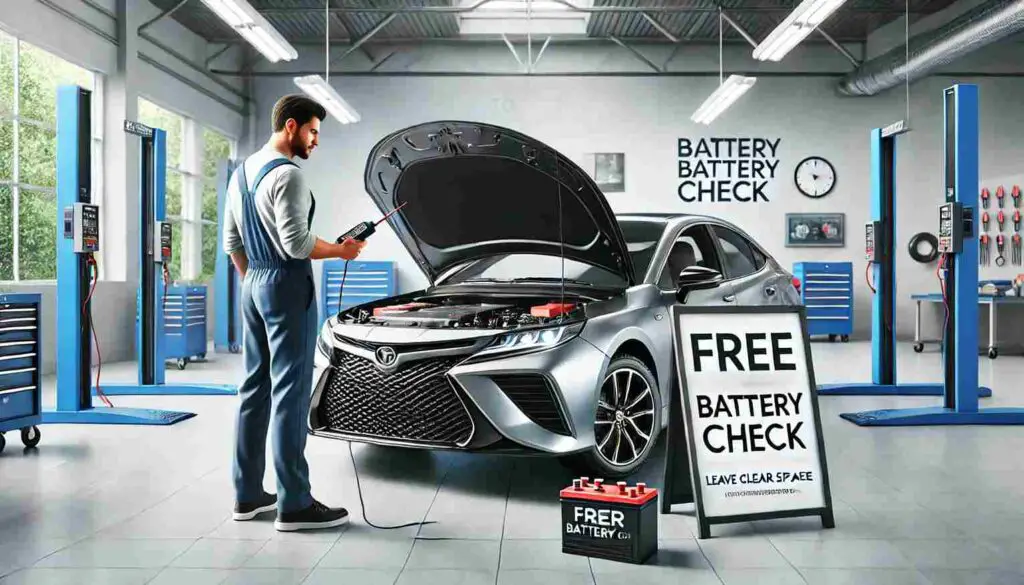
A dying car battery is one of those unexpected costs that can blindside you. But here’s the good news: you can check your car battery’s health yourself at home, for free or for under $20. This guide shows you exactly how to test your battery without visiting a mechanic, what the readings mean, and when it’s time to replace it.
⚡ Quick AnswerA healthy car battery should read 12.4-12.7 volts when the engine is off (using a multimeter).** If it reads below 12.2V, your battery needs charging or replacement. The easiest DIY test: buy a multimeter ($10-15), connect it to your battery terminals, and check voltage. Or visit AutoZone/Advance Auto Parts for FREE professional testing. Most car batteries last 3-5 years.
Why Your Car Battery Needs Regular Checking
Car batteries don’t usually fail overnight. They gradually lose capacity over time, showing warning signs before they die completely. Testing regularly helps you catch problems BEFORE you’re stranded.
Here’s why testing matters:
- Avoid being stranded: Nothing worse than turning the key and hearing silence in a parking lot
- Save money: Catch a weak battery early (recharge it) vs. emergency replacement ($150-300)
- Prevent damage: A weak battery stresses your alternator, shortening its life (alternators cost $400-800)
- Peace of mind: Know your battery is healthy BEFORE a trip or winter
- Plan ahead: Most batteries last 3-5 years — testing tells you when replacement is coming
Most car batteries last 3-5 years. Climate matters: hot climates = shorter life; cold climates = more stress on batteries in winter. Regular testing means you’ll replace it on YOUR timeline, not the battery’s.
7 Warning Signs Your Battery Is Dying
Don’t wait for a test. If you see these signs, your battery is in trouble:
| Warning Sign | What It Means | Urgency |
|---|---|---|
| Slow Engine Crank | Engine turns over slowly (“rur-rur-rur” instead of normal spin). Sluggish, weak sound | 🔴 High — Test ASAP |
| Dim Headlights | Lights noticeably dimmer when engine is off; brighten slightly when engine starts | 🟡 Medium — Test this week |
| Clicking Sound | Turn key = rapid clicking/ticking sound instead of engine cranking. Dead battery classic | 🔴 High — Battery likely dead or dying |
| Battery Warning Light | Red battery icon lights up on dashboard (usually means charging system failure) | 🔴 High — Alternator or battery issue |
| Engine Dies After Starting | Car starts but dies immediately, or dies randomly while driving | 🔴 High — Could be battery or alternator |
| Slow Crank in Cold Weather | Car starts slowly only when temperature drops below 20°F | 🟡 Medium — Battery weakening |
| Swollen/Cracked Battery Case | Physical damage visible on battery (swelling, cracks, leaks) | 🔴 High — Replace immediately |
Clicking sound + car won’t start = battery is likely DEAD or DYING. Don’t ignore this. Get a jump start and drive directly to a mechanic/auto parts store for testing. A dead battery can’t wait.
Method 1: Free Professional Testing (Easiest)
Don’t want to DIY? Get free battery testing at your local auto parts store. Takes 5 minutes, no appointment needed.
Where to Get Free Battery Testing:
- AutoZone — Free battery test in-vehicle, nationwide
- Advance Auto Parts — Free battery testing, nationwide
- O’Reilly Auto Parts — Free battery diagnostic
- Pep Boys — Battery testing available (some locations charge)
- Local mechanic shop — Often free or cheap ($10-20)
What They Do:
- Pop your hood and bring your car to the store
- An employee connects a battery analyzer to your battery terminals
- They run the test (usually takes 2-5 minutes)
- You get results: “Good,” “Fair,” or “Replace” — often with exact health percentage
- If it fails: They show you replacement options and pricing right there
Go to AutoZone or Advance Auto Parts WITHOUT buying anything. You get free professional testing no matter what. If battery is fine, you leave. If it needs replacement, you can compare prices.
Method 2: DIY Testing with a Multimeter ($10-15)
Want to test at home? A multimeter is cheap and accurate. You’ll have it for other home projects too.
What You Need:
- Multimeter: Digital multimeter $10-20 (Amazon, Walmart, auto parts stores)
- Your car (engine off, parked)
- 5 minutes of time
Step-by-Step Testing:
- Park your car and turn off the engine — wait 5+ minutes so battery stabilizes (no charging from alternator)
- Open hood and locate battery — red + terminal and black – terminal
- Set multimeter to 15-20 volts DC (look for “DCV” or “VDC” with 20V range)
- Connect red probe to battery’s positive (+) terminal — the red wire/terminal
- Connect black probe to battery’s negative (-) terminal — the black wire/terminal
- Read the voltage display — note the number showing on screen
- Compare to healthy range (see below)
What the Voltage Reading Means:
| Voltage Reading | Battery Status | What to Do |
|---|---|---|
| 12.6V – 12.7V | ✓ Healthy & Fully Charged | You’re good! Battery is fine |
| 12.4V – 12.6V | ✓ Good (Slightly Low Charge) | Battery is okay. Consider charging soon |
| 12.2V – 12.4V | ⚠ Weak (Needs Charge) | Charge battery immediately. Test again after charging |
| Below 12.0V | 🔴 Very Weak/Dead | Battery likely needs replacement. Get it tested professionally |
A voltage reading only tells PART of the story. A battery might read 12.4V but have weak “cranking power” (ability to start the car). This is why load tests at AutoZone are more accurate — they test real-world starting ability.
Method 3: Engine-Running Charging Test (Advanced)
For advanced DIYers: Test if your alternator is charging the battery properly.
The Test:
- With engine RUNNING at idle: Connect multimeter to battery terminals (same process as above)
- Read the voltage display while engine idles
- Note the reading
What It Should Read:
- Healthy charging: 13.8V – 14.4V while engine is running
- Below 13.5V: Alternator might not be charging properly → have it tested
- Above 14.8V: Overcharging (rare but possible) → have alternator tested
This tells you: If your battery is dying, is it the battery’s fault OR the alternator not charging it? Very useful diagnostic info.
Method 4: Simple Headlight Test (No Tools Needed)
Quickest possible test — no tools, done in seconds.
- Park car, turn off engine
- Turn on headlights (not high beams, regular headlights)
- Observe brightness — notice how bright they are
- Start engine
- Watch headlight brightness change — they should stay about the same or get slightly brighter
What It Means:
- Lights stay same brightness: ✓ Battery is probably fine
- Lights noticeably brighter after start: ⚠ Battery might be weak (alternator kicking in to power them)
- Lights flicker or dim dramatically: 🔴 Battery is likely weak or dying
Note: This is a rough test, not scientific. For real numbers, use the multimeter.
How to Charge Your Battery (If Weak)
If your battery reads below 12.4V, charge it before it dies.
Option 1: Quick Charge at Auto Parts Store
- Drive to AutoZone, Advance Auto, or local shop
- Tell them “I need a battery charge” (usually free or $10-20)
- They plug in a charger for 30 minutes to 1 hour
- Done — you get a recharged battery
Option 2: Charge at Home (If You Have a Charger)
- Disconnect negative terminal first (safety)
- Connect charger’s positive wire to + terminal
- Connect charger’s negative wire to – terminal
- Plug in charger, let run 4-12 hours (overnight is fine)
- Disconnect in reverse order
Option 3: Drive It (Slow Charge)
- Just driving your car charges the battery via alternator
- A 30-minute drive can add 0.5V charge
- This is slowest but works if battery is only slightly weak
If battery won’t hold a charge after charging, or drops voltage within hours: It’s dead/dying and needs replacement. Charging a dead battery is temporary fix only.
When to Replace Your Battery (Don’t Wait)
Time to buy a new battery if:
- Voltage stays below 12.0V: Even after charging
- Battery is 3+ years old: Most fail by year 4-5 anyway
- Clicking/won’t start: Classic dead battery sign
- Battery is visibly damaged: Swollen, cracked, leaking
- Rapid voltage drop: Reads 12.6V one day, 12.0V next day = dying
- Professional test says “replace”: Trust the diagnostic
Where to Buy:
- AutoZone: $80-200 depending on battery type; free installation
- Advance Auto Parts: Similar pricing; free installation
- Costco/Sam’s Club: Often cheaper ($70-150); may charge for installation
- Amazon: Cheapest option ($50-120); you install or have mechanic install
Frequently Asked Questions
Official Resources & Tools
- AutoZone — Free Battery Testing
- Advance Auto Parts — Free Battery Diagnostic
- O’Reilly Auto Parts — Battery Testing
- Your vehicle’s owner’s manual (battery specifications & location)
- Multimeter options: Amazon, Walmart, Home Depot (~$10-20)