
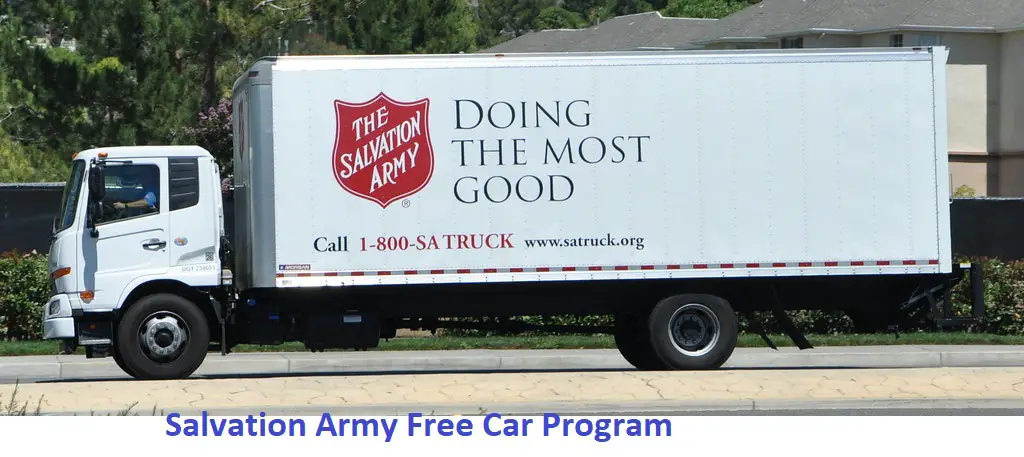
Last updated: April 12, 2026. If you searched for a “Salvation Army free car program,” the most important thing to know is this: The Salvation Army does not appear to run one national program where anyone can fill out a single online form and receive a free car. Help is usually local. Depending on your city, available funding, and your situation, a local Salvation Army office may be able to help with transportation-related needs such as gas cards, bus passes, emergency travel help, car repair referrals, or case management through programs such as Pathway of Hope.
That difference matters. If you need a vehicle for work, school, medical appointments, or child care, you should not waste time on fake “free car application” pages. Start with your local Salvation Army office, ask the right questions, and prepare documents that prove why transportation is the barrier keeping you from stability.
Quick Answer: Can the Salvation Army Give You a Free Car?
In most areas, you should expect transportation help rather than a guaranteed free vehicle. Some local offices may occasionally know about donated vehicles, partner nonprofits, repair assistance, or emergency transportation funds, but availability changes by location. The safest path is to contact your local office through the official Salvation Army location finder and ask what transportation help is available in your ZIP code.
| What you may need | What to ask for | Best next step |
|---|---|---|
| Car repair help | “Do you have emergency auto repair assistance or partner referrals?” | Bring the repair estimate, registration, insurance, and proof the car is needed for work or medical care. |
| Gas money | “Do you offer gas cards for work, medical appointments, or case-plan goals?” | Bring appointment proof, work schedule, or caseworker letter. |
| Bus or train fare | “Do you help with transit passes or transportation vouchers?” | Ask about one-time emergency help and ongoing community transit programs. |
| A car for employment | “Do you refer families to donated-car or working-car nonprofits?” | Also check local car donation nonprofits and county workforce programs. |
How Pathway of Hope Can Help With Transportation Barriers
The Salvation Army’s Pathway of Hope is a case-management program for families that want to move from crisis toward stability. The official Central Territory page says the program focuses on individualized services for families with children and helps address barriers such as employment, housing, education, child care, health services, and other community connections.
That does not mean every Pathway of Hope participant gets a car. It means a caseworker may help you build a plan and connect you with local resources. If transportation is the reason you cannot keep a job, attend training, take children to school, or get to medical care, explain that clearly when you call.
Official source: The Salvation Army Pathway of Hope.
How to Apply or Ask for Help Locally
- Find your local office. Use the official Find Help Near You tool and search by city or ZIP code.
- Call before visiting. Ask whether they handle transportation assistance, car repair assistance, gas cards, bus passes, or Pathway of Hope enrollment.
- Be specific about the transportation problem. Say whether you need help getting to work, medical care, court, school, child care, or a new job interview.
- Ask if funds are open right now. Local assistance can run out. If funding is closed, ask when to call again and whether they know a partner agency.
- Request referrals in writing if possible. A referral to 211, a workforce office, a church assistance fund, or a donated-car nonprofit can be just as useful as direct aid.
Documents to Prepare Before You Call
You may not need every document, but having these ready can speed up the process:
- Photo ID and current address
- Proof of income, benefits, or unemployment
- Proof of household members, especially children if applying for Pathway of Hope
- Work schedule, job offer letter, school schedule, medical appointment proof, or caseworker letter
- Vehicle registration and insurance if asking for repair help
- Written repair estimate if the car needs work
- Proof that the transportation issue is blocking income, health care, school, or family stability
What to Say on the Phone
Use a short, direct script. It helps the office understand your need quickly:
Hello, my name is ____. I live in ZIP code ____. I am looking for transportation assistance. I do not need general information; I need to know whether your office helps with car repairs, gas cards, transit passes, or referrals to donated-car programs. My transportation problem is affecting ____ because ____. What documents should I bring, and is funding open right now?
If You Need Car Repair Assistance
Search Console shows many people are looking for “Salvation Army car repair assistance.” For repairs, the strongest application usually explains why fixing the car prevents a bigger crisis. For example, a $450 repair may help someone keep a job, attend dialysis, take children to school, or avoid losing housing because they can keep earning income.
If your local Salvation Army cannot help with repairs, try these next:
- Call 211 and ask for “transportation assistance” and “auto repair assistance.”
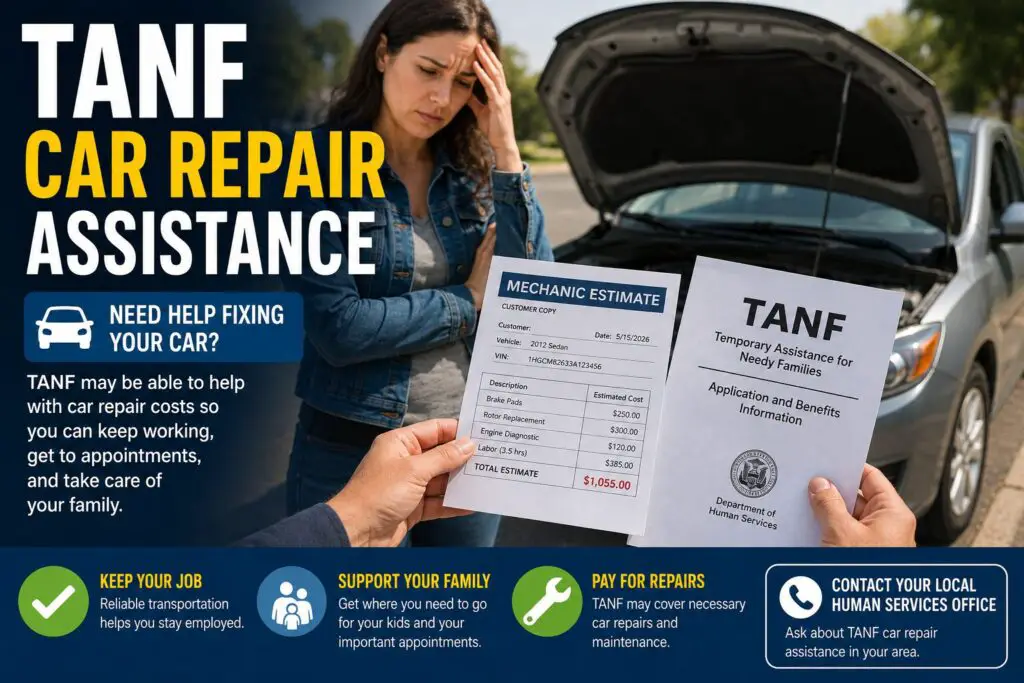
- Ask your county human services office whether TANF, workforce, or emergency assistance funds can cover transportation.
- Check our guide to auto repair grants for low-income families.
- Review car lots that accept state vouchers if your state has a real referral or voucher process.
If You Need a Free or Donated Car
If the local Salvation Army office does not provide vehicles, ask for referrals to nonprofits that focus on working-car programs. You can also check our detailed guides on free cars and transportation options for college students, free cars for veterans, and government car voucher programs.
Be careful with websites that promise “instant approval” or ask for a fee to apply for a free car. Real assistance programs usually ask for eligibility documents, local residency, proof of need, and time to review your case. They do not guarantee a vehicle just because you submit an online form.
Common Questions
Is there a Salvation Army free car program application online?
There is no single national free-car application that works for every U.S. location. Use the official Salvation Army location finder and contact the office that serves your ZIP code.
Does the Salvation Army help with car repairs?
Some local offices may help with emergency needs or referrals, but it depends on local funding and rules. Ask specifically about car repair assistance, gas cards, bus passes, and Pathway of Hope case management.
Can I get help if I do not have children?
Pathway of Hope is commonly described as a family-focused program, but local Salvation Army offices may offer other emergency assistance or referrals. Call your local office and explain your situation.
What if my local office says no?
Ask for referrals before ending the call. Then contact 211, your county human services office, workforce center, local churches, community action agency, and donated-car nonprofits in your area.
Bottom Line
The best way to approach the Salvation Army for transportation help is to treat it as a local assistance request, not a guaranteed free-car program. Start with your ZIP code, ask about the exact type of help you need, bring proof, and follow up with partner referrals if direct funding is not available. That gives you a much better chance than filling out random “free car” forms online.






2 thoughts on “Salvation Army Free Car Program: Real Transportation Help and How to Apply”
Comments are closed.